Agentic analytics on top of Snowflake, built on a semantic layer
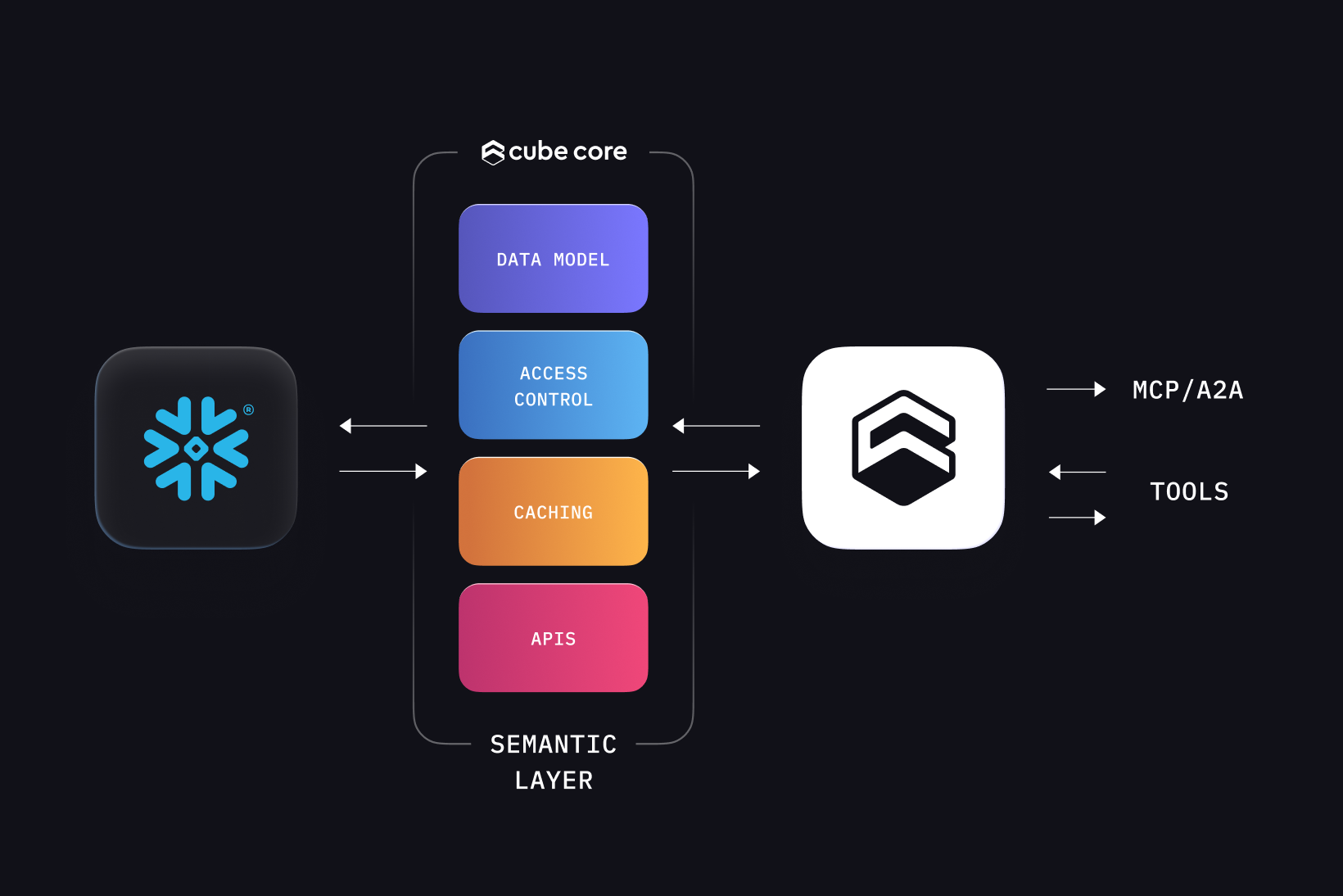
Cube is the agentic analytics platform that sits on top of Snowflake. It turns your Snowflake data into governed metrics that every dashboard, spreadsheet, embedded app, and AI agent reads the same way — so business users and agents get answers they can trust. Connect Snowflake, model your metrics once, and serve them everywhere in minutes.
Answers people trust
business users and AI agents query Snowflake in plain language and get metrics your data team governs.
Governance that travels
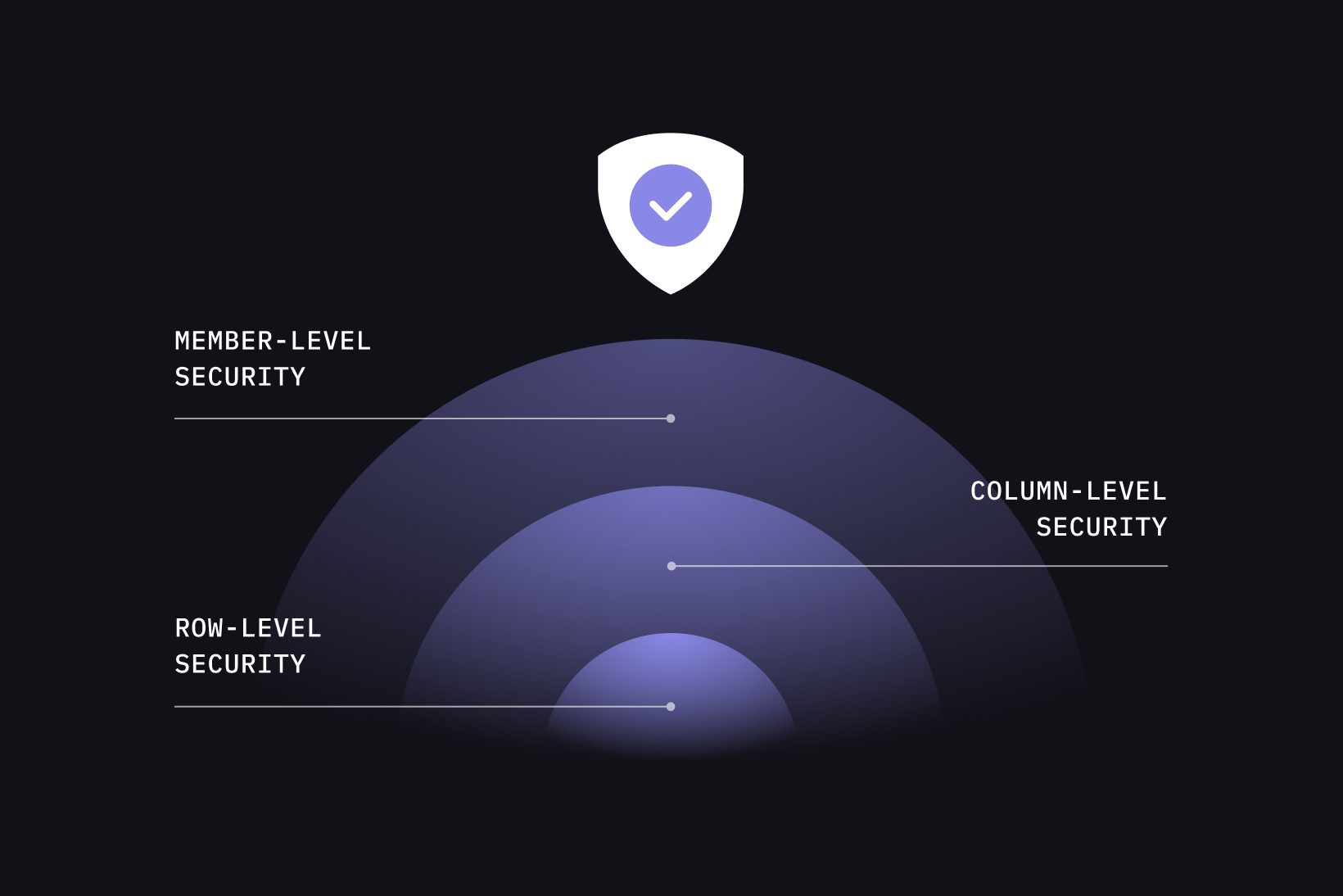
row-, column-, and user-level rules modeled once, enforced across every tool and API.
Faster queries, lower cost
high-performance caching on top of Snowflake keeps responses sub-second and cuts warehouse load.

“With Cube, we’ve been able to speed up time to release a new data model to production by 5x and decrease analytics downtime by 90%. And, since the Cube team is so responsive, collaborative, and fast to deliver, we benefit from new features very frequently.”Read the story
How Cube and Snowflake work together
Snowflake stores and queries your data. Cube builds on it with a semantic layer that defines your metrics, relationships, and access policies for internal BI, embedded analytics, and the AI agents working across both.
Internal BI
Chat, workbooks & dashboards
AI agents
Governed context across both experiences
Embedded Analytics
Analytics inside your product
Semantic Layer
 Snowflake
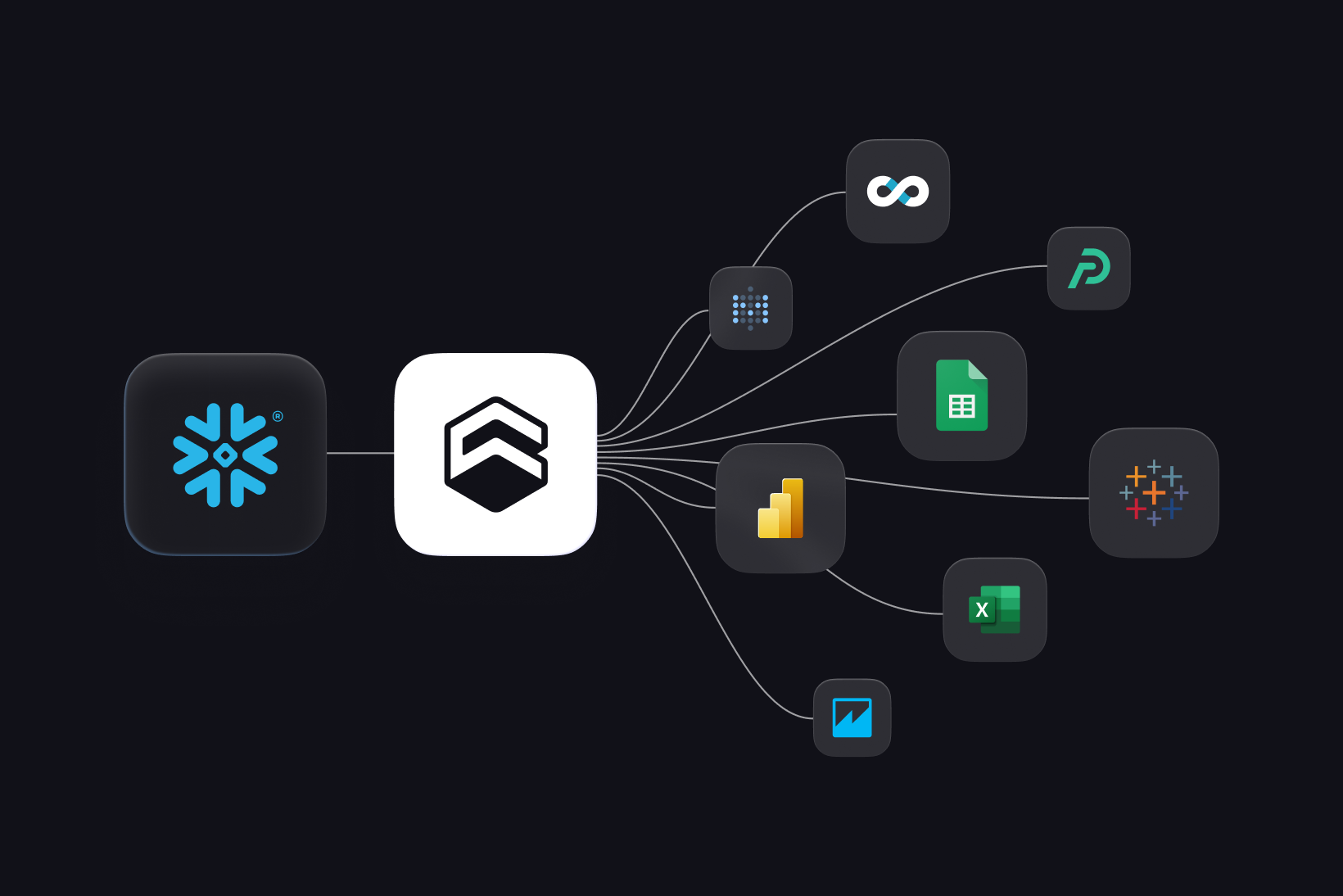
Deliver Your Snowflake Data Where It's Needed
Serve your governed Snowflake metrics to every consumer from one model — a Postgres-compatible SQL API for BI, REST and GraphQL for embedded analytics, MDX for Excel, and DAX for Power BI. No re-implementing logic in each tool, and no metric sprawl.
Secure Your Data at the Semantic Layer
Define row-level, column-level, and user-level access rules upstream, in the semantic layer, and they apply automatically across every tool and API — even into AI agents and spreadsheets. Governance follows the data, so you stay compliant without locking people out of the tools they prefer.
Optimize Snowflake Performance and Reduce Compute Costs
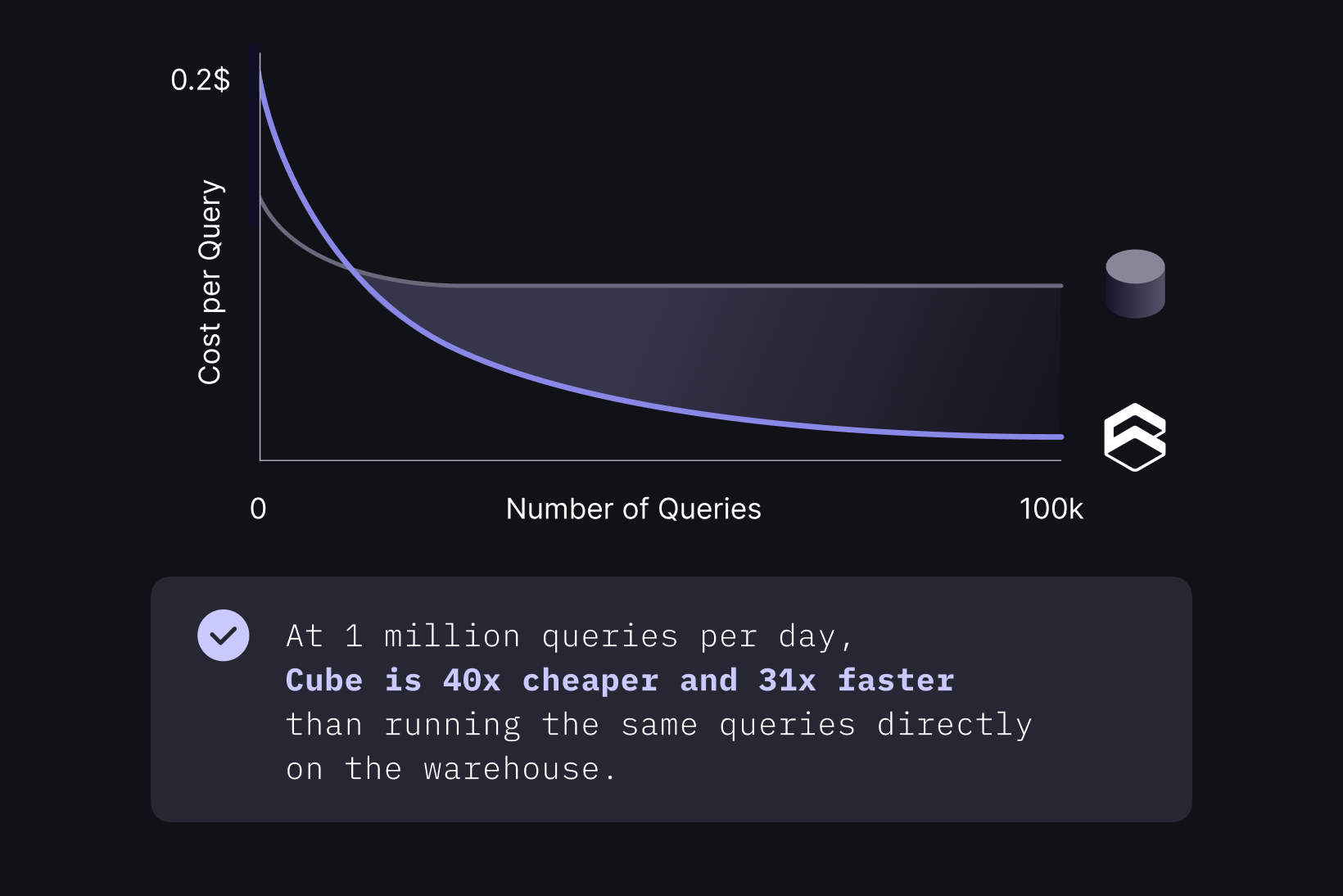
Cube's high-performance caching sits on top of Snowflake, delivering sub-second API responses under high concurrency while cutting warehouse load and cost. It's a performance layer for every connection, from dashboards to agents.
Ground AI Agents on Trusted Context from Cube
Cube's AI agents work natively on top of Snowflake, grounded in your governed semantic model. They automate analysis, explain their outputs, and act within your governance guardrails — Snowflake is the source, and the semantic layer is what makes their answers trustworthy.